
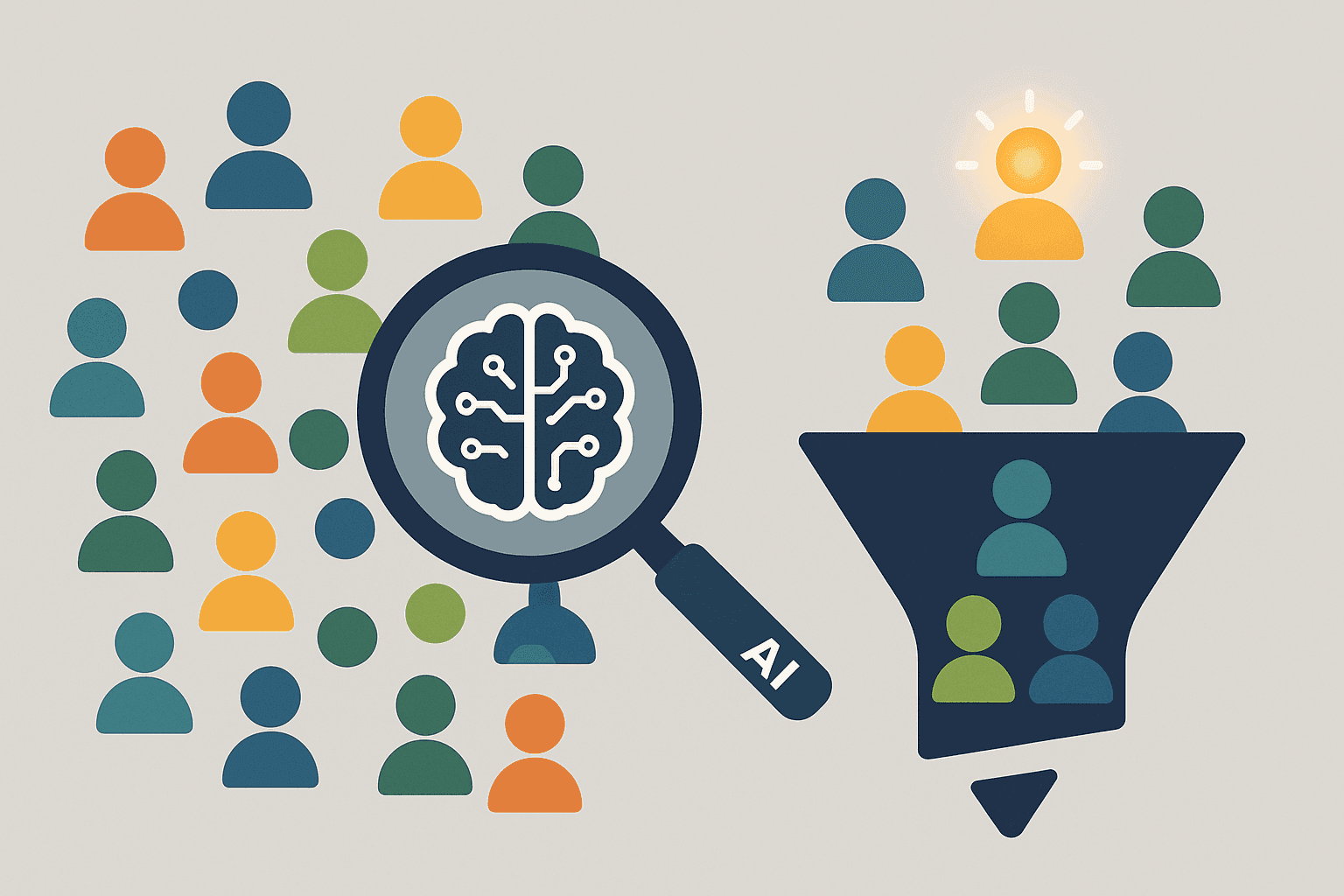
The HR department at a growing tech company recently discovered something unsettling: their best performer from the previous year's hiring cohort almost didn't make it past the initial resume screening. A human recruiter had initially passed over the candidate due to an unconventional career path. Only a last-minute decision to expand the interview pool brought them in. This near-miss sparked a fundamental question: how many exceptional candidates never get their chance because of human limitations in processing applications? The answer lies in understanding how AI in HR addresses precisely these kinds of systematic blind spots.
The Current State of AI in Human Resources
Modern HR departments juggle an overwhelming array of responsibilities. They screen thousands of resumes, coordinate hundreds of interviews, manage performance reviews, track employee engagement, ensure compliance, and somehow still need to think strategically about talent development. The sheer volume of administrative work often drowns out the human element that supposedly defines Human Resources.
AI in HR isn't about replacing human judgment—it's about freeing HR professionals from drowning in paperwork so they can focus on what humans do best: understanding people, building culture, and solving complex interpersonal challenges. When HR automation handles the repetitive tasks, HR teams can finally invest time in meaningful employee conversations and strategic workforce planning.
The adoption statistics tell a compelling story. According to recent industry surveys, 67% of HR professionals believe AI has already improved their recruitment processes, while 96% expect it to enhance talent acquisition capabilities within the next two years. These aren't speculative projections but reflections of tangible improvements already happening across organizations of every size.
Understanding AI's Capabilities in HR Management
AI for recruitment represents just the visible tip of a much larger transformation. These systems now analyze job descriptions to identify biased language that might discourage diverse candidates from applying. They scan resumes not just for keywords but for patterns of achievement and potential that human reviewers might overlook. They even assess video interviews for communication skills and cultural fit indicators, though these applications require careful oversight to prevent algorithmic bias.
Beyond hiring, AI in HR extends into every aspect of the employee lifecycle. Predictive analytics identify flight risks before employees even start job hunting, analyzing patterns like declining engagement scores, changes in work patterns, or shifts in internal network connections. Natural language processing reads through thousands of employee feedback comments to surface emerging concerns before they become organizational crises. Machine learning algorithms personalize learning and development recommendations based on individual career trajectories and skill gaps.
Consider how HR automation transforms performance management. Instead of annual reviews based on manager recollections and subjective impressions, AI systems continuously aggregate feedback from multiple sources, track goal progress in real-time, and identify coaching opportunities as they arise. This shift from episodic evaluation to continuous development fundamentally changes how organizations nurture talent.
Practical Applications Across the Employee Journey
Recruitment and Talent Acquisition
The numbers alone make the case for AI for recruitment. A typical corporate job opening attracts 250 resumes. Reviewing each thoroughly takes 15-20 minutes, meaning over 60 hours of human effort for a single position. AI screening can process the same volume in minutes, ranking candidates based on sophisticated matching algorithms that go beyond keyword searches to understand context, assess potential, and predict success probability.
But the real value emerges in quality improvements. AI systems eliminate unconscious bias by focusing on qualifications rather than names, addresses, or educational pedigrees. They identify transferable skills that traditional screening might miss—recognizing that a military logistics officer might excel in supply chain management or that a teacher's classroom management skills translate perfectly to project coordination.
Onboarding and Integration
First impressions matter, yet many organizations still onboard new employees with a stack of forms and a rushed orientation. AI in HR personalizes the onboarding journey based on role, department, and individual learning style. Chatbots answer routine questions 24/7, ensuring new hires never feel lost or forgotten. Intelligent systems track onboarding progress and alert managers when intervention might help, catching potential issues before they lead to early turnover.
Smart onboarding platforms learn from each cohort, continuously refining the process. They identify which resources new hires actually use, what questions arise repeatedly, and where confusion commonly occurs. This iterative improvement ensures each new employee receives a better experience than the last.
Performance and Development
Traditional performance reviews suffer from recency bias, where recent events overshadow months of consistent performance. AI changes this by continuously collecting and analyzing performance data from multiple sources—project management tools, peer feedback systems, customer interactions, and collaboration platforms. The result is a comprehensive, objective picture of employee contributions over time.
HR automation also democratizes development opportunities. Instead of relying on manager advocacy or self-promotion, AI identifies high-potential employees based on actual performance patterns and leadership indicators. It matches employees with mentors, suggests relevant training programs, and even predicts which employees would benefit from stretch assignments or role changes.
Employee Engagement and Retention
The cost of replacing an employee ranges from 50% to 200% of their annual salary, making retention a critical business imperative. AI in HR predicts turnover risk with startling accuracy by analyzing dozens of factors humans might never connect. Changes in email patterns, declining participation in voluntary activities, or shifts in internal network connections all provide early warning signals.
More importantly, these systems don't just predict problems—they suggest solutions. If an employee shows signs of disengagement, the AI might recommend a check-in conversation, a new project assignment, or additional training opportunities. This proactive approach addresses issues before they escalate to resignations.
Challenges and Ethical Considerations
The promise of AI in HR comes with significant responsibilities. Algorithmic bias remains a persistent concern, particularly in recruitment applications. If historical hiring data reflects past discrimination, AI systems trained on that data will perpetuate those biases unless carefully designed and monitored. Organizations must regularly audit their AI systems for fairness and ensure diverse teams oversee their development and deployment.
Privacy concerns also demand attention. HR automation systems collect vast amounts of employee data, from performance metrics to communication patterns. Organizations must balance the benefits of data-driven insights with respect for employee privacy and autonomy. Clear policies about data collection, use, and retention are essential, as is transparency about how AI influences HR decisions.
The human element cannot be lost in the rush to automate. While AI for recruitment can efficiently screen candidates, final hiring decisions should incorporate human judgment about cultural fit and potential. While algorithms can flag performance issues, addressing them requires empathetic managers who understand personal circumstances and motivations. The goal is augmentation, not replacement.
Implementation Best Practices
Successfully deploying AI in HR requires thoughtful planning and gradual implementation. Organizations should start with a clear problem definition rather than searching for ways to use trendy technology. Perhaps your recruitment process takes too long, leading to lost candidates. Maybe performance reviews feel arbitrary and demotivating. Or turnover in specific departments exceeds acceptable levels. Starting with specific challenges ensures AI solutions deliver measurable value.
Data quality fundamentally determines AI effectiveness. HR automation systems trained on incomplete or inaccurate data produce unreliable results. Before implementing AI, organizations should audit their HR data, standardize collection processes, and establish governance protocols. This foundational work might seem tedious, but it determines whether AI becomes a valuable tool or an expensive disappointment.
Change management proves equally crucial. HR professionals might fear AI will eliminate their jobs, while employees might worry about algorithmic decisions affecting their careers. Successful implementations emphasize how AI in HR empowers rather than replaces human professionals. Training programs should focus on helping HR teams interpret AI insights and override recommendations when human judgment suggests a different approach.
The Return on Investment
Measuring AI's impact in HR requires looking beyond simple efficiency metrics. While reduced time-to-hire and lower recruiting costs provide clear value, the true return often appears in improved quality of hires, better employee retention, and enhanced organizational performance. Companies using AI for recruitment report 35% reduction in turnover among new hires and 20% improvement in employee productivity.
The financial impact extends throughout the organization. Better hiring decisions mean fewer bad hires—each of which costs an average of $15,000 according to industry studies. Improved retention saves recruitment and training costs while preserving institutional knowledge. Enhanced employee engagement drives productivity, innovation, and customer satisfaction. When these benefits compound over time, the ROI becomes compelling.
Looking Ahead: The Future of AI in HR
The next generation of AI in HR will move beyond automation to true intelligence. Natural language processing will enable nuanced analysis of employee communications, detecting not just sentiment but specific concerns, aspirations, and cultural dynamics. Computer vision might analyze workplace interactions to optimize office layouts or identify collaboration patterns that drive innovation.
Predictive analytics will become prescriptive, not just identifying problems but recommending evidence-based solutions. If turnover risk increases in a department, AI will suggest specific interventions based on what has worked in similar situations across thousands of organizations. HR professionals will become strategic advisors armed with data-driven insights rather than administrators managing processes.
The integration of AI with other emerging technologies will create new possibilities. Virtual reality could transform training and development, with AI personalizing immersive learning experiences. Blockchain might create portable employee credentials that follow workers between organizations. The Internet of Things could provide real-time data about workplace conditions and their impact on productivity and wellbeing.
Conclusion: Embracing Thoughtful Transformation
The revolution in HR isn't about technology replacing humanity—it's about technology enabling HR to be more human. When HR automation handles routine tasks, HR professionals can focus on building relationships, developing talent, and creating cultures where people thrive. When AI for recruitment eliminates bias and identifies hidden potential, organizations build stronger, more diverse teams. When predictive analytics prevents problems before they occur, employees feel valued and supported.
Organizations ready to embrace AI in HR should approach it as a journey of continuous improvement rather than a one-time implementation. Start small, measure results, learn from mistakes, and gradually expand successful applications. Maintain human oversight, regularly assess fairness and effectiveness, and never forget that behind every data point is a person with unique needs, aspirations, and potential.
The HR department that discovered they almost missed their star performer has since implemented AI screening that looks beyond traditional qualifications to identify potential. They haven't eliminated human judgment from hiring—they've enhanced it with insights humans alone might miss. This balanced approach, multiplied across every HR function, represents the real revolution: not artificial intelligence replacing human resources, but augmented intelligence empowering HR to finally deliver on its promise of putting humans first.